7. What Policies Are in Place for Regulating Research with Human Subjects?
Advances in science and technology, and an increasingly complex network of stakeholders, have led to a range of national responses to the international call for ethical biomedical research. Countries have operationalized and expanded the directive of the Declaration of Helsinki in various ways. In most cases, the establishment of regulatory bodies and rules was in response to news that unethical practices had occurred.
Nuremberg and the Declaration of Helsinki
During WWII, Nazi Germany industrialized medical research, using prisoners as test subjects. Their practices extended to the most marginalized and persecuted, and included orphans, the mentally ill, and those of ethnicities deemed unfit by their ideology. The uncovering of these practices led to an international effort to curtail harms to those captured during war, but also extended protections more generally to all medical research subjects. A brief overview of the history leading to policy and practice regarding human research subjects is outlined below.
Overview
The voluntary consent of the human subject is absolutely essential. The experiment should be such as to yield fruitful results for the good of society, unprocurable by other methods or means of study, and not random and unnecessary in nature. -Nuremberg Code 1948
After ensuring that the potential subject has understood the information, the physician or another appropriately qualified individual must then seek the potential subject’s freely- given informed consent. -Declaration of Helsinki 1964
Respect for persons requires that subjects, to the degree that they are capable, be given the opportunity to choose what shall or shall not happen to them. -Belmont Report 1979
Except as provided elsewhere in this policy, no investigator may involve a human being as a subject in research covered by this policy unless the investigator has obtained the legally effective informed consent of the subject or the subject’s legally authorized representative. -The Common Rule 1981
Belmont Report and The Common Rule
In the US, The National Research Act of 1974 and the Belmont Report of 1978 require that human research subjects be informed of risk-benefit ratios, have autonomy in decision making, and have the ability to discontinue participation at any time. These regulations emerged when it was revealed that the US Public Health Service engaged in the Tuskegee Syphilis experiments of 1932-1973. The Tuskegee Trial prevented African-American men from acquiring antibiotic treatments even after the drugs became available in the 1940s. The rationale for the study was to study the disease progression in African American males over the course of their lifetimes. The Act has since been updated to provide special provisions for vulnerable populations including women, children, and prisoners (Code of Federal Regulations title 45).
In 1991, the Act was extended from the Department of Health and Human Services to the Food and Drug Administration (FDA) and fourteen other federal agencies, and is now known as the “Common Rule.” In this capacity, the Common Rule requires institutions to formulate an Institutional Review Board (IRB Guidebook) to oversee federally-funded research practices involving human subjects. IRB committee composition is designed to reduce conflicts of interest, and includes members from the institution who span a wide array of disciplines and practices, as well as members from the community and other institutions or organizations. All researchers supported by federal funding and using human subjects must apply for IRB approval, regardless of whether the research subjects reside in the US or other countries
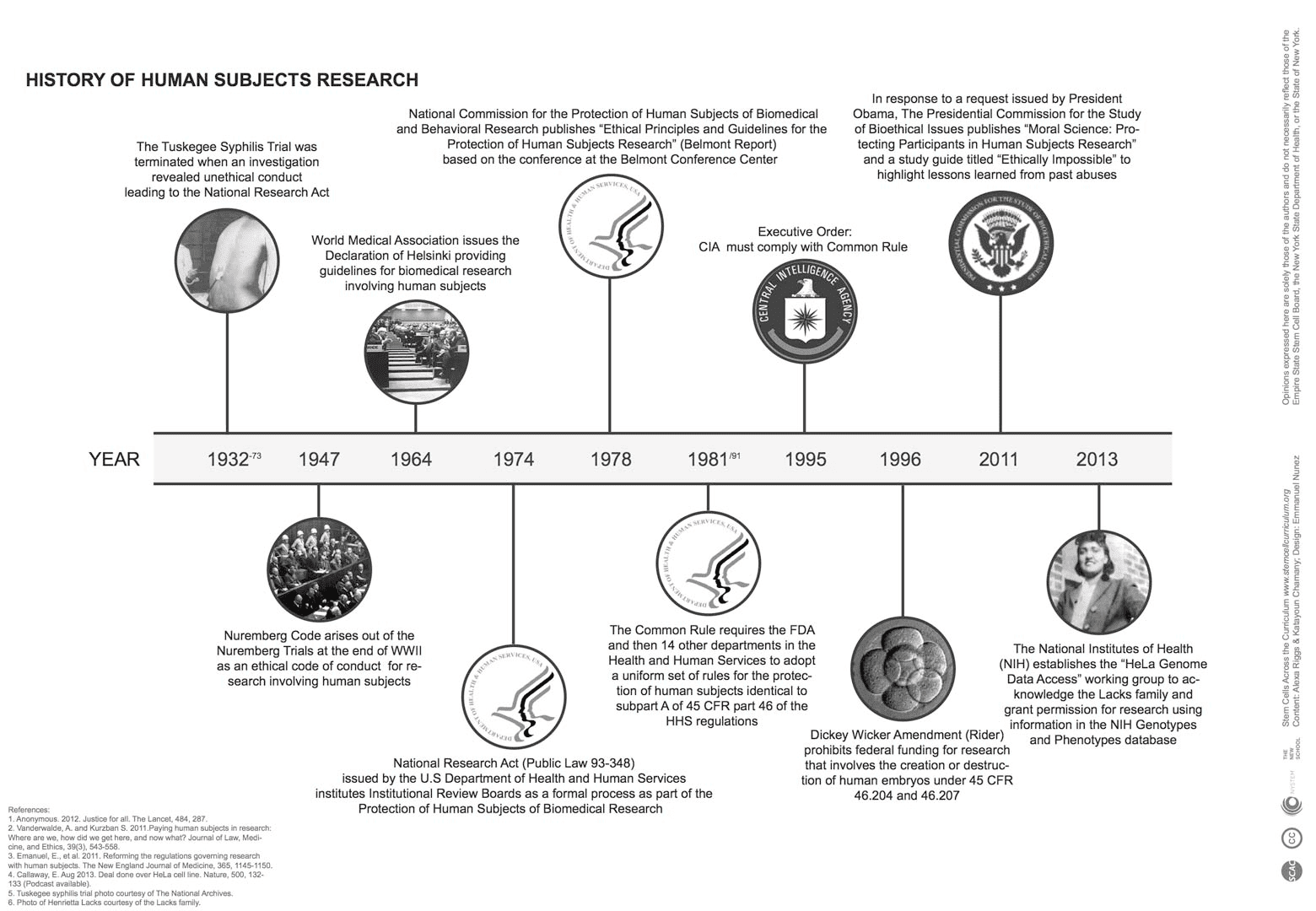
Human Subjects Research Timeline
In 2010 more discoveries of the USPHS studies abroad prompted President Obama to request for a review and redress of the code of conduct regarding research using human subjects (Obama, 2010). These egregious practices included federally funded research that included forced sterilization of women in the name of reproductive medicine, deliberate infection of individuals in Guatemala to study sexually transmitted diseases, and DNA research that questioned the heritage of the Havasupai without their permission (Presidential Commission for the Study of Bioethical Issues, 2011a; Presidential Commission for the Study of Bioethical Issues, 2011b; Anonymous, 2012; Garrison, 2013; Lehrman, 2013).
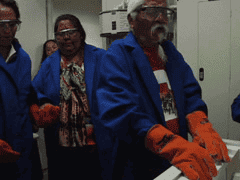
Video:Thirteen/Education Broadcasting Corporation (Producer.) June 25, 2010. Religion & Ethics Weekly: Informed Consent and Medical Research. (7:22 min) Link
Warning
This video no longer exists, but the transcript is still available under the video player.
In response to the President’s executive order to minimize harm and increase effectiveness of research with human subjects, The Office of Management and Budget convened a working group titled Advance Notice of Proposed Rule Making (ANPRM). In addition, the National Bioethics Committee and the National Academies of Sciences (NAS) issued reports documenting needed improvements in the system (Emanuel et al., 2011). Collectively, these committees and working groups proposed revised standards that address advances in science and technology and increased education and awareness. To that end, the National Bioethics Committee published a Study Guide titled “Ethically Impossible” for educators (Presidential Commission for the Study of Bioethical Issues, 2012). In addition to this guide, the Commission created an Education Link with several other teaching tools with many available in Spanish.
Unlike the original Common Rule, the proposed changes address ethical issues concerning privacy, compensation, and ownership that extend beyond the body of the human subject and include tissues, cells, and DNA of the individual, otherwise referred to as biospecimens. The proposals also emphasized a participatory action research model, in which communities are involved in directing and informing research practices and benefits to the community outweigh harms. Although some welcomed these proposals, were stalled until January 2017, due to concerns that such intensive management would stunt research efforts (Chamany, 2015; Anonymous, 2013a). In the interim, some researchers became wary of using clinical samples in population-based research (Emanuel et al., 2011).
In 2017, after an extensive review including 2100 public comments, the Common Rule was revised. In an effort to inform research subjects and avoid lengthy and jargon ridden language, the revisions require a concise summary of benefits and risks to research subjects. Additionally, identifiable specimens can be secured under broad consent, while de-identified specimens, as was previously done, do not require informed consent and IRB review. This last provision came under great scrutiny, given the media coverage of the HeLa cell line and its derivation alongside other case examples of dual use. Dual use in this context refers to specimens acquired for diagnosis and/or treatment and also for research. Though the proposed revisions had intended to require consent in these circumstances, many researchers felt it would halt research and, thus, this aspect of the rule was not revised.
Like the US, the United Kingdom has also implemented policies to uphold the ethos of the Declaration of Helsinki. These policies extend beyond the national healthcare system to include research practices and new technologies. The UK is considered a leader in this regard with a universal health care system and the establishment of the Human Tissue Authority (HTA) and the Human Fertilisation and Embryo Authority (HFEA). These bodies regulate practices surrounding collection and banking of biospecimens and issue licenses to those seeking their use in research. The UK has, in an unusual move, also addressed the balance between benefit and risk for research subjects by constructing a no-fault insurance fund for unintended medical harm suffered by research subjects within the context of research (VanderWalde & Kurzban, 2011). In order to address benefits more directly, the HFEA has additionally instituted an egg-sharing policy in 1993, which allows individuals seeking assisted reproductive technologies to obtain additional cycles at reduced cost, if they donate 50% of their eggs to biomedical research (HFEA Egg Sharing Schemes).
Given the UK’s dedication to regulating the collection, management, and access to biospecimens, the ANPRM regarding the Common Rule turned to the UK and more generally the EU for guidance and adopted similar proposals. These included requiring projects funded by private dollars to abide by the Common Rule, but in the same breath eliminating the need for broad consent for de-identified specimens. The European Union, which had taken a similar approach, reversed its position at the end of 2015 drafting legislation that would grant researchers access to data for which patients or research subjects provided broad consent (Feldwisch-Drentrup, 2015).
Both the ANPRM and the EU legislative processes allowed for public input, and in some cases, open letters influenced the final outcomes. In the EU the European Data in Health Research Alliance, which included the Wellcome Trust, pushed hard for the reversal using the URL “Datasaveslives.com.” In the US, the National Institutes of Health funded a project to collect public opinion through surveys informed by a meta analysis of patient and research subjects’ views via the Consent, Education, Regulation, and Consultation (CERC) Working Group of the Electronic Medical Records and Genomics (eMERGE) consortium working group (Garrison et al., 2015).
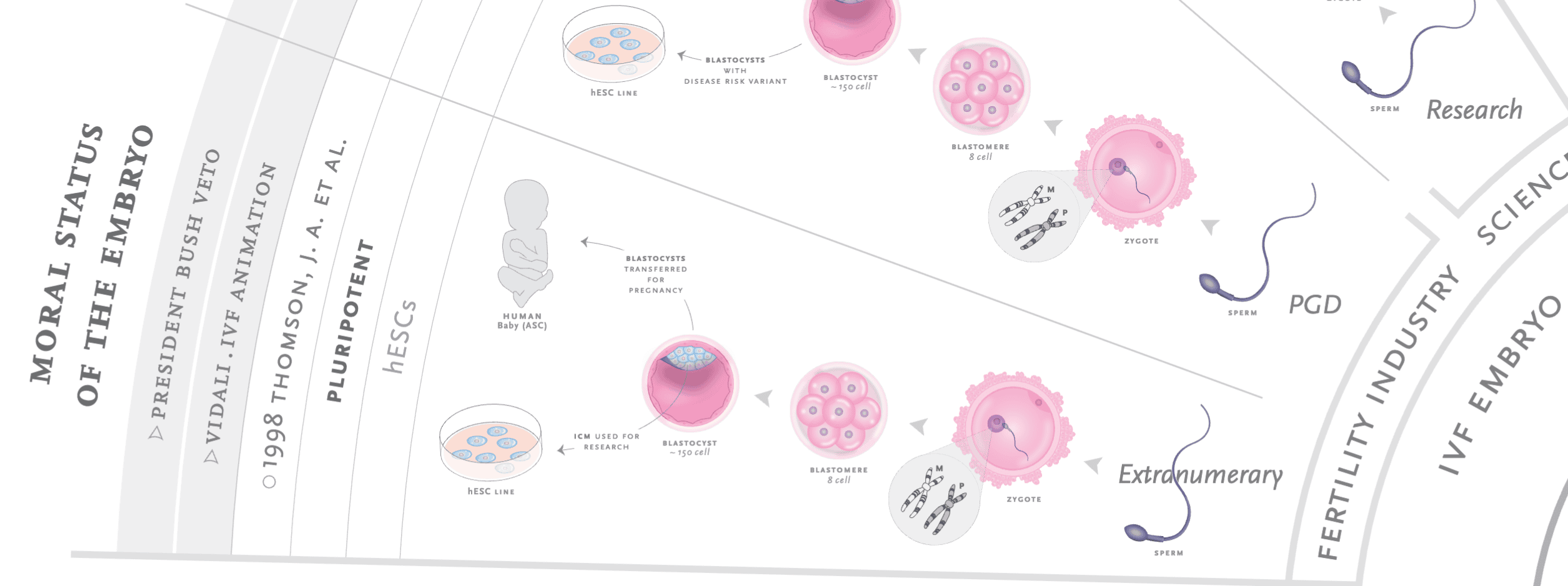
Embryo.IVF.Extranumerary ZoomGraphic
Technological Advances and Policy Making
In many countries, the interpretation of human subject ethics in the context of generating national biobanks presents new challenges.
Iceland’s deCode, a company purchased by Amgen, has come under fire for a study that seeks to triangulate data from human research volunteers, genomic databases, and family members’ medical records. This is the second time that Kari Stefansson, founder of deCode, has run into problems when creating a “work-around” for informed consent as it relates to population studies. The Icelandic Data Protection Agency (DPA), ruled that the company must first obtain informed consent from each individual to be studied, and that health records can be not be treated as publicly available information (Kasier, 2013).
In the US, the 2010 Stem Cell Research Enhancement Act implemented a policy to increase cord blood banking. This policy was in response to a Government Accountability Office (GAO) report that highlighted the lack of diversity in public cord blood banks. Cord blood has in recent years become the preferred source of blood stem cells that are used during transplant therapies for blood-related disorders, due to its less immunogenic properties and less invasive collection method as compared to either blood stem cells collected from bone marrow or the peripheral blood supply. Despite efforts to increase awareness around donations post-birth, 97% of all cord blood is discarded as medical waste, with the majority of donations occurring in the private cord blood banking sector. Reasons for the low donation rate include general mistrust of the biomedical community, concerns regarding identity and privacy associated with the samples, and resistance to the creation of marketable goods that may subsequently be inaccessible for the donor (Mohapatra, 2013).
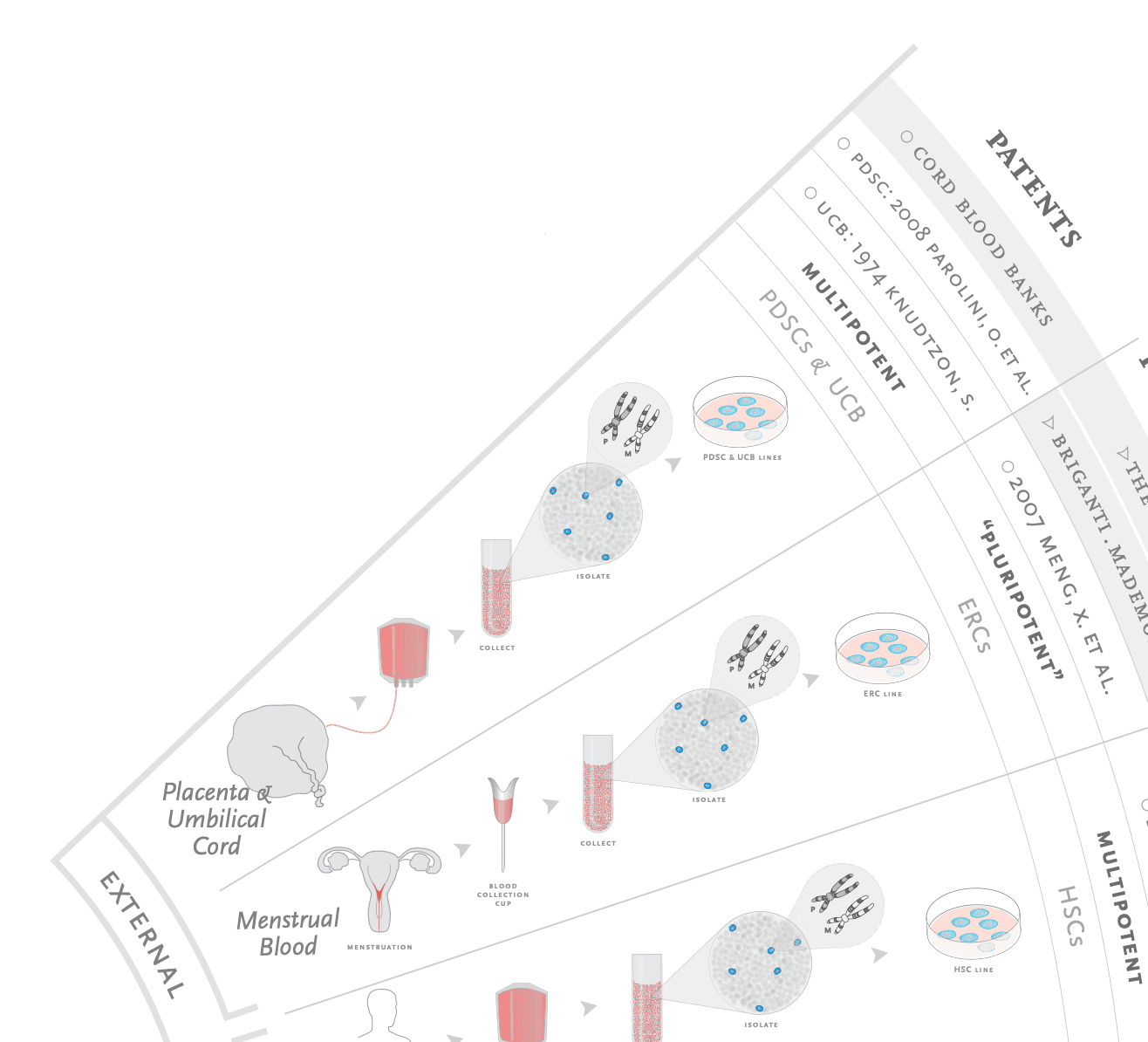
Adult. Adult Cell Source. Blood Stem Cells ZoomGraphic
Patents and Laws
As the number and types of biobanks increase so, too, have the number of court rulings associated with biobanking, resulting in a significant impact on the diversity of, and public access to, banked human tissues and cells. Court cases can be divided into those addressing the patenting of banking processes and those that address banked products.
In 2002, Pharmastem, a leader in cord blood banking, sought licensing fees from commercial umbilical cord banks using their collection, freezing, and storage technology. Ultimately, Pharmastem sued the commercial banks for patent infringement, threatening the livelihood of not only commercial cord blood banks but public cord blood banks as well. The cord blood banks argued that the technologies were ubiquitous in cell banking and thus, considered “prior art.” In 2009, the courts decided that the Pharmastem patents were invalid because the companies were not buying or selling cord blood, but simply providing a paid service to families interested in banking their newborn’s blood stem cells (Kurtzberg, J. et al. 2005).
In 2013, the US Supreme court decided that Myriad Genetics’s product patents on BRCA1/2 DNA sequences were not valid, reversing twenty years of patenting in the biotech sector. The court, however, maintained the validity of process patents for techniques in which a drug or diagnostic is developed based on DNA sequence information. Following these earlier rulings, it would seem that tissue samples themselves can not be patented because they occur naturally in human bodies, making them a public good (Marshall & Price, 2013). Yet, any discoveries made using such samples would continue to be patentable and thus, marketable. This stance regarding tissues and cells is apparent in decisions to invalidate the Wisconsin Alumni Research Fund (WARF) patents on the first human embryonic stem cell lines, which were created using private funding and extranumerary embryos that had been donated from fertility clinics (Wadman, 2005).
In all of the above instances, financial benefit could be bestowed to all stakeholders, except the individuals from whom tissue or DNA samples are acquired (Kominers & Becker, 2012). In the US, the Bayh-Dole act of 1980 permits development of marketable and patentable products using basic scientific research conducted by universities that are funded by federal money (Loise & Stevens, 2010). This policy has created the field of translational science, which involves moving basic science from the laboratory bench to the clinic.
In some cases, the perceived inequity of financial benefit to some stakeholders (biomedical researchers, universities, the pharmaceutical industry, or national governments) and not others (human research subjects) has resulted in patients who sue to protect their individual rights as they relate to ownership and compensation. In most cases, courts have declared loss of individual ownership for material that has been removed from the body in a therapeutic context.
To avoid such complications and reduce undue inducement associated with participation, France has restricted monetary payments to human research subjects. (VanderWalde & Kurzban, 2011). Meanwhile, many countries are utilizing opt-out policies in which all clinical samples can be used for research under the auspices of “presumed consent,” with no financial benefit accruing to donors regardless of whether therapies or diagnostics are developed using their samples (Anonymous, 2013). This approach is already used in five countries in the realm of organ donation and is continuing to expand (Harman, 2009).
Video: Nov 11, 2015. The Challenge of Informed Consent In Times of Controversy. UC Irvine School of Law. Video footage is broken up by speaker and topic. Panels are tackle complicated issues. Radhika Rhao specifically addresses Henrietta Lacks and Deborah Laufer, playwright of Informed Consent site pushes back on biomedical ethics, while Marcy Darnovsky brings in issues of equity and social justice on Panel 2. Link
Created : July 23, 2026